
Tim Hecker: Always different, always the same
A guide to one of my favorite artists and his "questing and unclassifiable" music

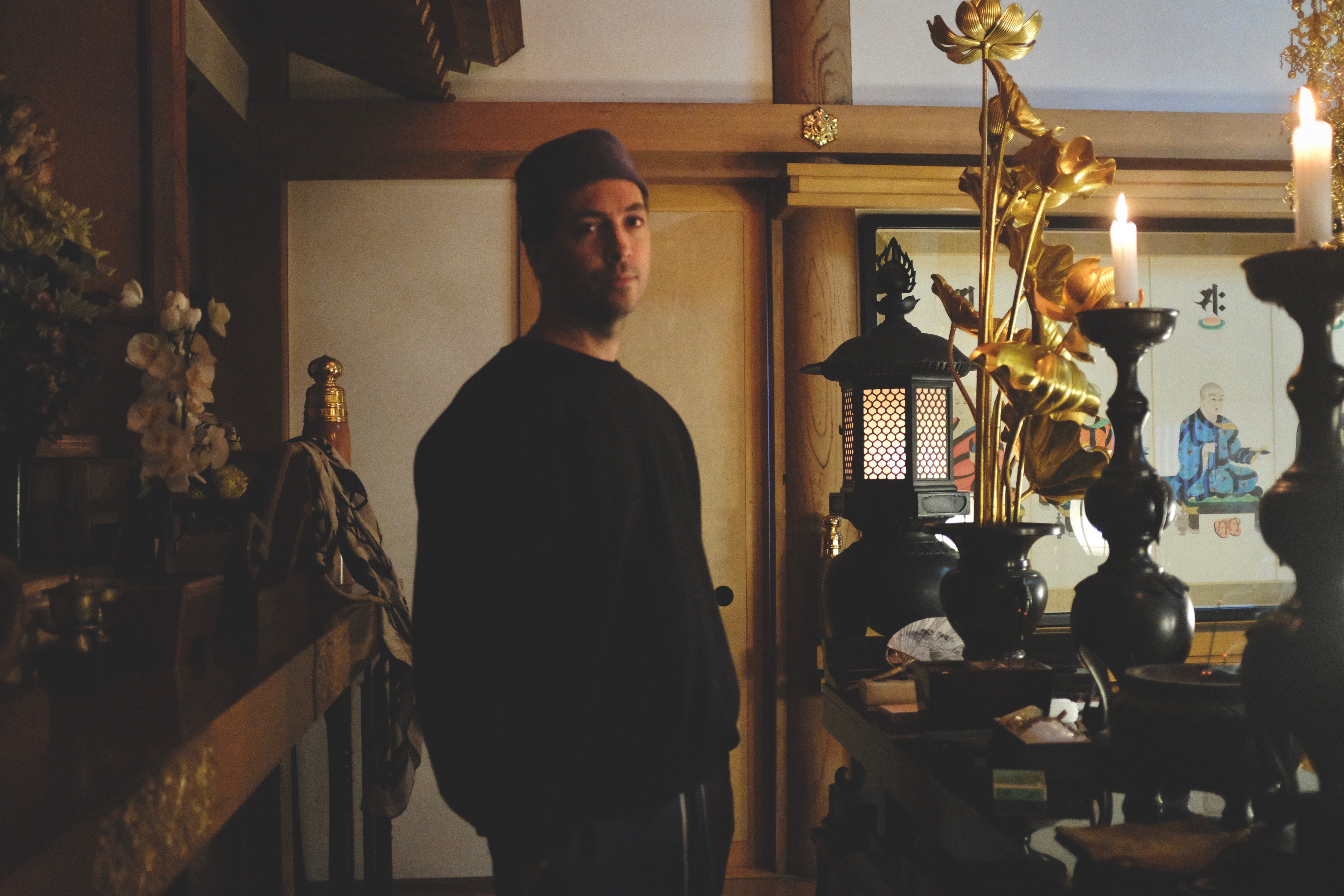
I’ll admit, sometimes I take this newsletter stuff entirely too seriously.
After a few of the ideas I was working on solidifying for this week’s newsletter fell through, I was panicking about what to write about. That is, until I remembered … you don’t need to take this so seriously, just write about something.
I sometimes get bogged down trying to keep all of my newsletters Michigan-centric. It can feel a bit limiting at times, like I’m boxing myself into what already feels like a niche subject to begin with. When I see other great music stackers just randomly pick out a song, artist or album they love on a whim and go long on it, I’m a bit envious of their creative freedom.
Thankfully, I received a prompt from my good Substack buddy Chuck Marshall, who tagged me in a post earlier this week asking me to name my top five favorite artists EVER. The prompt seemed impossible to tackle at that particular moment. Until I reminded myself: STOP TAKING THIS SO SERIOUSLY!
Breaking free from my self-created rusty cage, I spit out my top five artists of all time, which happened to include experimental ambient artist Tim Hecker, whose second album inspired this blog name, some of you might recall. Hecker probably felt a little out of place to some among the other artists I chose, including Substack hero Brad Kyle, who suggested I write a post about who Hecker is and why he’s so important to me. A serious artist making serious music? True, but it was a great prompt for a post I was in need of, so I ran with it.
Casting aside the insecurities about what this newsletter is supposed to be about and whether it’ll find the right audience, I’ve decided to write about Tim Hecker and why his challenging, wide-ranging experimental music resonated with me more than 20 years ago and why I keep coming back to it. And while I’m no Stephan Kunze, Dusty Henry or Tone Glow, I hope you enjoy it … seriously.
Sound Rationale
Back in the early 2000s, my world was turned upside down by a community of music appreciators on the social site Livejournal, which provided a message board-like forum for discussion. The community, Sound Rationale, expanded greatly on how I learned about music at that time, which was primarily through sites like the mostly indie-centric Pitchfork.
To become a member of the exclusive Sound Rationale group, you needed to fill out an application that existing members would then “vote” on by evaluating your music taste. You had to name your top 10 artists, top five albums of all time and favorite artists in at least a half dozen genres, along with a bunch of other super detailed questions about what songs reminded you of certain emotions.
The community’s granular level of music obsession was something I badly wanted to be a part of, but most of the members voted against me joining. It was a tough crowd and my taste was too indie. Too Rolling Stone. It felt humiliating, but also exhilarating to realize just how much I didn’t know and how much music I hadn’t yet discovered. I needed to branch out, level up and listen to other genres, they said.
So I did, and while some of the members of that listening community were pretty harsh, plenty of others were happy to help expand my taste, building a base with essential artists to check out in genres like jazz, soul, country, southern rap and especially ambient music -- genres I dove into and gained great appreciation for in the decades that followed.
Beyond the obvious starting points of Brian Eno’s essential ambient series and Aphex Twin’s’ monumental album Selected Ambient Works Volume II, a couple of the members I trusted most during that time sang the praises of other foundational ambient and experimental electronic artists like Windy & Carl, GAS, The Orb and Oval, along with a budding Canadian experiment ambient artist named Tim Hecker, who was beginning to find his footing after previously making music under his techno-leaning moniker Jetone. While these artists would all come to hold a special place in my heart, Hecker was the artist whose career I would watch mature and flourish as my taste in the genre expanded. In some ways, it feels like we’ve been on this journey of discovery and constant evolution together.
A new discovery
After hunting down the only Hecker album I could find at my local record store, a CD of his third album Mirages, I was immediately drawn in by the hissing fog of static and white noise; a seemingly neverending rumble of feedback and intermittent buzzing, pulsating noise. It was eerie but oddly comforting to my young ears. It sounded like My Bloody Valentine with the backdrop of a lonely city at night -- a mood that accompanied the album cover’s saturation of green fluorescent lights contrasting the pitch dark sky.
Moods shifted from one indecipherable track of processed noise to the next, until the album’s 10-minute epic closer Incurably Optimistic!, where guest guitarist David Bryant added some of the most beautiful crackling feedback I had ever heard to accompany a gloomy organ melody until both cut out like a lost radio signal. As a sad, college-aged young man lacking direction as I aimlessly sent letters to prospective employers at newspapers across the state begging them to hire me, it felt like the life soundtrack I had been searching for. I had to hear more.
I went backwards to seek out Hecker’s first two albums: His glitching, droning debut masterpiece Haunt Me, Haunt Me, Do it Again, an endlessly atmospheric and at times creepy affair with interludes of faint voices emerging like ghosts, only adding to his mystique. His sophomore album, Radio Amor, added considerable depth to my understanding of Hecker’s overall sound palette and mission of mashing and manipulating sound to rewire your brain, making you ponder deeply what they were originally intended to be.
Static voices can faintly be heard throughout the album’s entirety, culminating in the shimmering glacial texture and rumbling bass of late album stunner and Hecker all-timer Azure, Azure, a track that takes on three unique life forms as it unfolds.
All of Hecker’s trio of early albums are capable of being relegated to the role of “background music,” as ambient music might have originally been intended, but the complexity of Radio Amor’s layers showed me that those who return to his music for additional listens are ultimately rewarded. As one of my favorite music critics and Hecker scholar Mark Richardson wrote in his review of Radio Amor, listening to him is like witnessing something recognizable but abstractly awe-inspring.
In this world, all sounds are reduced to their fundamentals and smeared like mud against a crumbling brick wall. But the shapes are still something to behold.
While I didn’t need convincing to continue to follow Hecker in the years that followed, it didn’t hurt that he turned in his most “accessible” album next on his 2006 breakthrough Harmony in Ultraviolet. Listening to it now, it feels like the equivalent of reading a “Hecker for Dummies” book with its mountainous feedback and serene comedowns of pretty synthesizer noise. It also feels the most cohesive, with each track bleeding into the next, with the occasional jaw-dropper like the melodic, haunting Chimeras throbbing into focus like introductory theme music to an A24 thriller. At my first newspaper job in Big Rapids, Michigan, I proudly snuck in Harmony in Ultraviolet among my top 10 albums of the year on the small daily newspaper’s year-end entertainment page.
Required deeper listening
As the following decade unfolded, Hecker’s recognizability as one of the most consistent but uncompromising artists in ambient music only grew with each magnificent new release and collaboration as the genre grew in mainstream consciousness with the evolution of the music streaming era. Much like BBC Radio 1 DJ John Peel described Mark E. Smith’s legendary post punk band The Fall as “They are always different; they are always the same,” you could assign a similar description to Hecker’s music. From track to track, from album to album, there is an instantly recognizable DNA to his compositions, but surprising left turns of cacophonous noise are the norm.
In a 2023 New York Times profile of Hecker during the boom of functional ambient music proliferation, Hecker classified his wide spectrum of sounds as “the rainbow of possibility for people - extreme joys, incredible suffering.” His Bandcamp page describes his music as “questing and unclassifiable.” This is not simply background or “chill out” music.
In his profile of Hecker around the release of his late-period classic album Virgins, experimental music aficionado Christopher Weingarten attributed Hecker’s status as a modern ambient flagbearer to his meticulousness and perfectionism in creating “mostly pulseless, heavily processed, unapologetically suffocating, and aggro-noir” music.
“How Tim has managed to break through the proverbial noise and find a larger audience is somewhat astounding,” said Joel Leoschke, co-founded Hecker’s record label, Kranky, in Weingarten’s profile. “He’s not making new age music or even rock music. I don’t know how to explain it. What he does is not something that’s immediately apparent. It’s not a pop song. It requires deeper listening, it requires concentration, it requires you to pay attention to what’s happening.”
What’s happening are changes in tone and mood despite Hecker’s uncanny ability to capture a cohesive core sound, evoke feelings of turbulence, serenity, eeriness, bliss and even horror. Some of his later period compositions wind up and disintegrate with liminality, as they do on his appropriately transitional 2009 album An Imaginary Country. Others like the 2011 album Ravedeath, 1972 evoke a woozy yet unified sound from multiple sources including organ and piano tones to accompany his trademark feedback.
He’s also collaborated with an impossibly wide set of musical counterparts to expand his sonic universe, from indecipherable, alien-like vocals by the Icelandic Choir Ensemble on his 2016 album Love Streams that attempted to channel “Chewbacca singing into a saxophone” to the Japanese gagaku ensemble Tokyo Gakuso, who provide wind and percussion accompaniment on his 2018 album Konoyo.
These descriptions and lists of collaborators might be alienating or offputting to uninitiated listeners who desire escape from their ambient music listening experience, but that might precisely be the intention of Hecker’s constantly mutating, visceral sound, American post-metal band Isis member Aaron Turner noted in Weingarten’s profile.
“It can be placid and serene at times, but it never falls into the realm of being background music,” Turner said.
In Grayson Haverin Currin’s NYT profile of Hecker, he detailed Hecker’s labor-intensive process of creation via motifs like a delirious rhythm or entrancing melody; improvising over it, sometimes hundreds of times until pieces “pile up like strata of handbills amassed on a light pole.” Hecker then edits out the parts that don’t fit to create different feelings for these different moments.
“I’m using 24 channels of bleeding, contaminated, overloaded, feedbacking pieces that link to all the others. I don’t want a straightforward emotion -- the best things for me are the ones that are confusing as to how I feel,” Hecker said.
What I love so much about music is it isn’t beholden to any set of rules and it can express anything. It doesn’t have to be straightforward or formulaic or beautiful or comforting or challenging or perfectly executed in a studio one time -- it can be all of these things or none of them. Tim Hecker taught me this as I learned how to listen to music in deeper, more meaningful ways.
What a great essay. It must have been tough to get rejected by that music community you wanted to join. I must say that I admire your composure and strength of character in the way you handled it. I'm glad some members of that community gave you a couple of pointers and helped you discover new sounds, especially as Tim Hecker became so influential for you. You did such a good job describing the context in which you discovered these tracks for the first time. I can totally see how his music reached you in ways other music perhaps hadn't. I liked all the tracks you shared here, but Chimeras is a proper trip 🔥
PS: As for writing inspiration and the constraints of your Michigan-focused angle, I hear you. The best advice I can give you (as someone who went through something similar a while back) is that your readers will want to read about what moves you. The connection to the "main" topic will sometimes be more obvious than other times, but it's always there. At the end of the day, Canada is just next door from Michigan 😉
The advantage of taking things seriously is perhaps that it makes able to write such a good text on Tim Hecker! Restacked.